gonstead
Gonstead Technique in Chiropractic Treatment
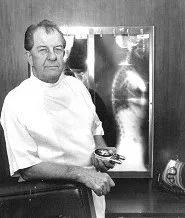
The Gonstead Technique was developed by Dr. Clarence Selmer Gonstead, a pioneer in chiropractic care who became passionate about the field after witnessing remarkable recoveries from severe leg and foot pain that had not responded to traditional medical treatment. His experience led him to develop a biomechanical system of analysis and treatment that remains one of the most respected and precise approaches in chiropractic today.
At the core of the Gonstead system is the belief that optimal spinal health begins with a stable foundation. Dr. Gonstead emphasized the importance of pelvic alignment and leg-length equality in supporting the spine. When these foundational structures are level, the spine can maintain maximum stability and function. The technique is specifically designed to identify and correct intervertebral misalignments, motion disturbances, nerve dysfunction, and especially disc-related subluxations.
Assessment and Analysis
Gonstead chiropractors conduct a thorough and meticulous analysis of the spine before performing any adjustment. Key components of the assessment include:
Full-spine radiographs to visualize spinal alignment and structural issues.
Static and dynamic palpation to assess paraspinal tissues, muscle tone, and joint movement.
Visual inspection of posture, spinal motion, and gait.
Instrumentation, such as thermographic analysis, to detect temperature changes along the spine that may indicate nerve irritation or inflammation.
Radiographs are carefully analyzed to measure vertebral positions and pelvic alignment. These findings are translated into "listings," which guide the chiropractor in delivering precise, condition-specific adjustments.
The Adjustment
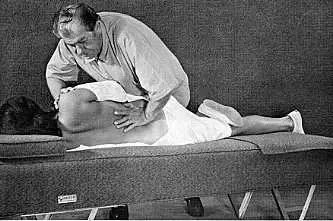
Gonstead adjustments are known for their precision and specificity.The technique uses:
High velocity – a quick thrust to initiate correction.
Short lever contact – direct contact near or on the vertebral midline for control.
Low amplitude – shallow depth, targeting the disc and joint without excessive force.
Long lever stabilization – the chiropractor may use their hand or thigh to stabilize adjacent regions during the adjustment.
This combination allows for effective correction while minimizing stress on surrounding tissues.
Specialized Equipment
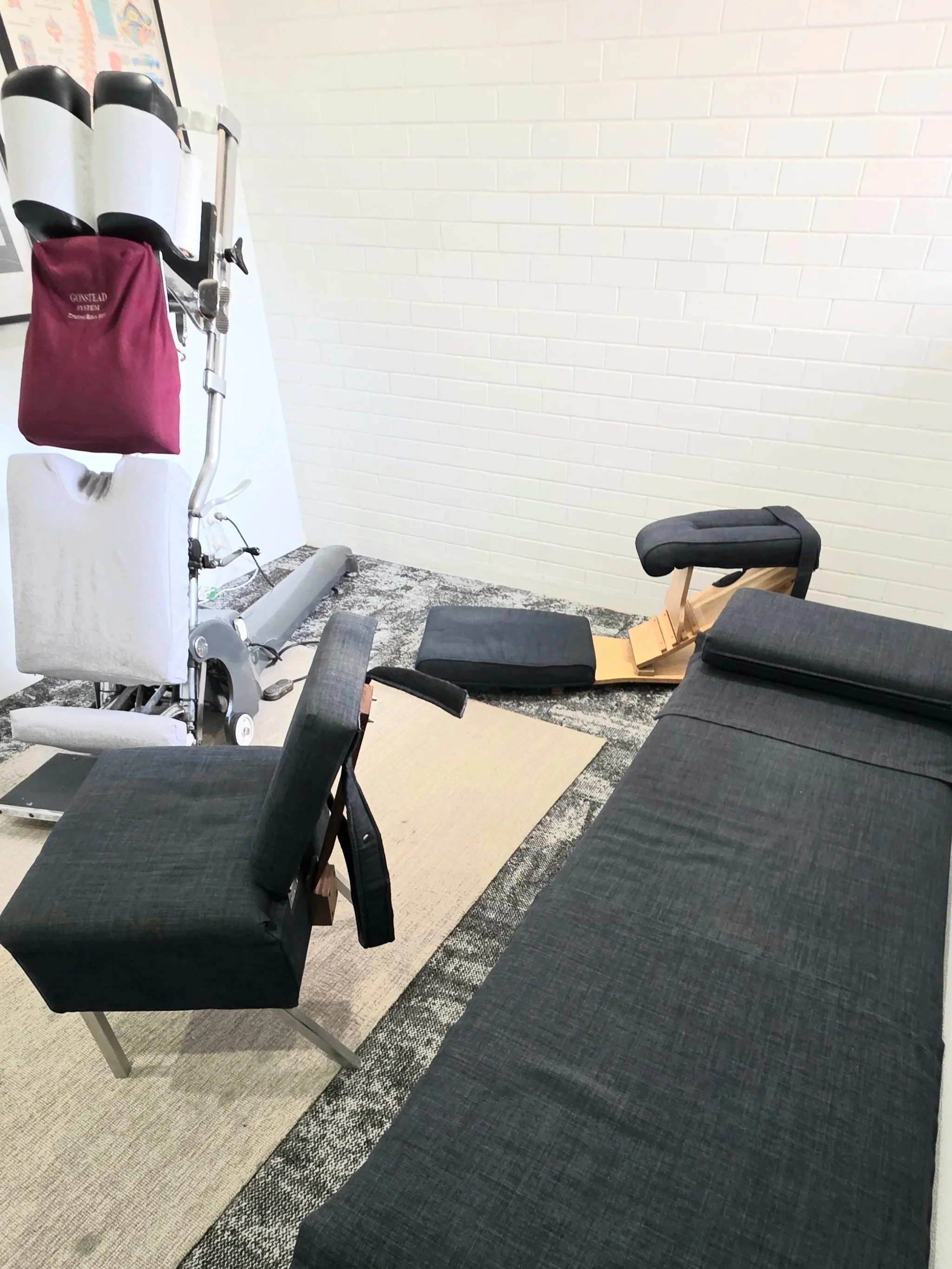
Gonstead adjustments often utilize specialized adjusting tables for patient comfort and optimal positioning. Two key tables include:
Hi-Lo Table: Originally designed for Dr. Gonstead, this table assists with safe positioning and transition from standing to lying down. It's particularly helpful for elderly patients and pregnant women.
Knee-Chest Table: Designed to facilitate precise posterior-to-anterior corrections, this table allows effective repositioning of posteriorly displaced discs. It is especially effective for pelvic and lumbar adjustments and is also widely used with pregnant patients due to its supportive design.
Cervical Chair
The Gonstead Cervical Chair is specifically designed for seated cervical adjustments. This position allows the chiropractor to deliver highly specific and controlled adjustments to the neck while maintaining the spine in an optimal alignment. The chair is particularly useful for patients experiencing neck pain, headaches, restricted neck movement, and certain upper cervical conditions.Pelvic Bench
The Pelvic Bench is designed to provide optimal positioning for precise pelvic and lower spinal adjustments. By stabilising the pelvis and allowing the chiropractor to deliver a controlled line of correction, it helps improve the accuracy of adjustments while maximising patient comfort. The Pelvic Bench is commonly used for sacroiliac joint dysfunction, pelvic imbalance, and lower back conditions.